
1. Progress Reports: What Are They?
Construction progress certificates are documents issued by the Project Management Office that acknowledge a liquid debt as consideration for the work units completed during the reference period.
They allow for the valuation of the work completed in each phase of the process and enable the invoicing of the portion of the budget that has been executed, resulting in the corresponding partial payment.
This payment allows companies to stock up on materials, pay payroll, or make any other payments necessary to continue the project.
Construction certifications are based on the budget agreed upon by the parties. Any modifications must be made through justified variances.
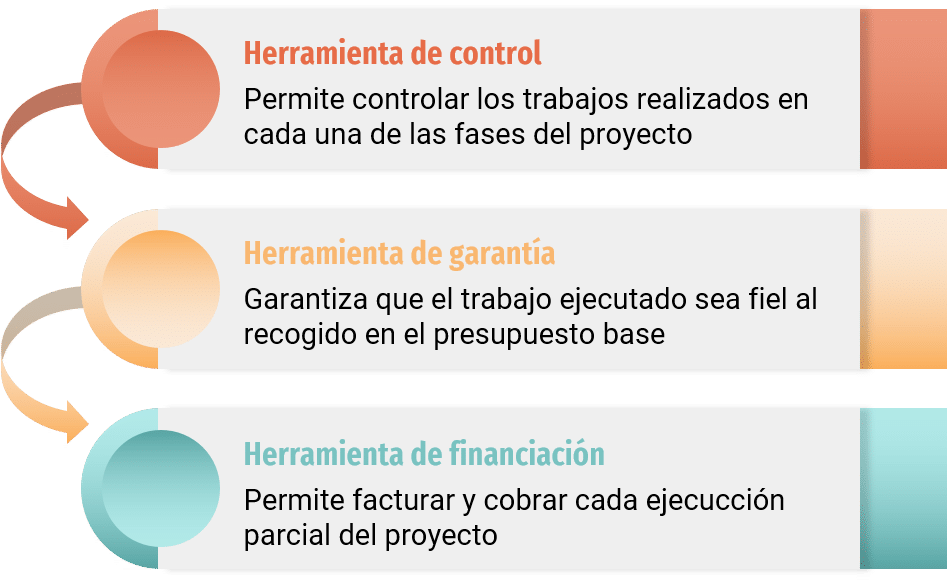
A work certification is important because it serves the following functions:
2. What should a work certification include?
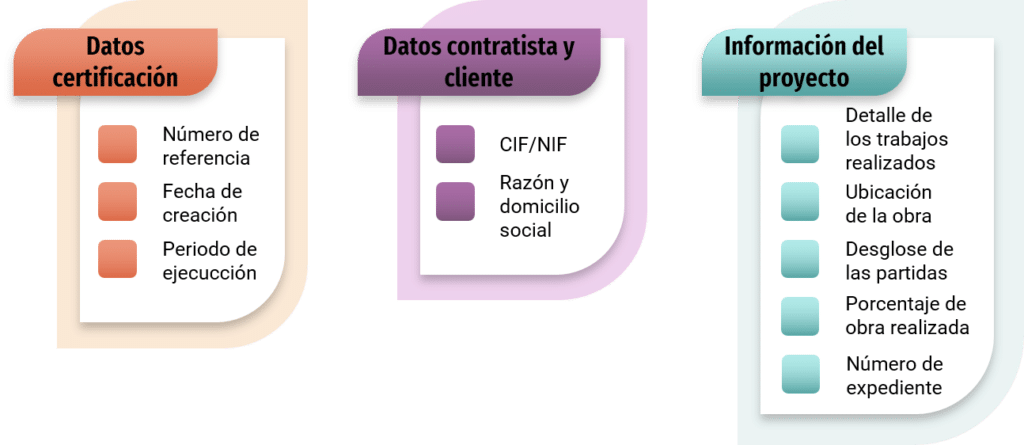
All of the information listed below must appear clearly and prominently on the progress payment certificate:
- Certification details: The certification must have an identification number for reference, a date of issuance, and must specify the period during which the work was performed.
- Contractor and client information: Tax ID number (CIF/NIF), business name, and registered office address.
- Project information: Details of the work performed, including:
- – Start and completion dates
- – Location of the project (municipality and province)
- – Breakdown of each line item, clearly detailing the taxable base amount and applicable taxes
- – You must indicate the percentage of the project completed to report on its progress, specifying the total amount certified in previous certifications.
- – The project file number.
- – Any deviations must be justified and evaluated.
3. Types of Certifications
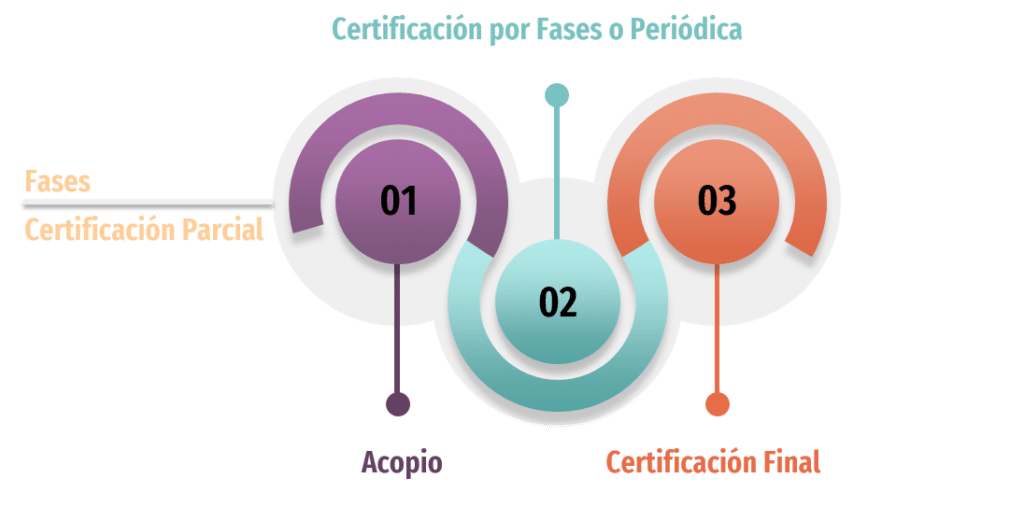
Depending on the number of certifications to be issued, a distinction can be made between partial completion certifications and a single certification.
Partial completion certificates
This type of certification is the most common and involves partial invoicing of the project, carried out through ordinary certifications.
Once the final certification is completed and the warranty period has elapsed, the contract may be settled through the settlement certification, also known as the supplementary final certification.
Ordinary certifications are payments on account, since the construction contract is indivisible and is considered complete only when executed in its entirety. Payments linked to these partial certifications are subject to adjustments and variations that may arise in the final measurement.
Ordinary certifications are based on measurements of the work units completed during the specified period. Once these measurements are taken, the construction manager will draft the initial cost estimate. The work performed will be valued at the prices listed in the project’s appendix or unit price schedule, taking into account any deductions for defects in the work and lump-sum items (units of work with arbitrarily set prices).
Among the partial progress payments, considering billing deadlines, the most advantageous are periodic payments, typically monthly, since, unlike phase-based certifications, delays in the execution of the work will reduce the likelihood of causing potential cash flow problems or disruptions to the proper progress of the project. However, periodic certifications require greater oversight and speed in their preparation.
Final Project Certification
The final project certification is prepared once the project is completed.
It requires a notarized document signed by the project manager, as well as approval by the relevant professional association.
With this certification, the project is considered complete, and the building may then be used for its intended purpose.
This is why this certification carries implicit significance and is one of the most important documents for the project.
Single Certification
It entails full payment for the construction project once it is completed.
It is processed in the same manner as the final project certification, as described under the section on partial completion certifications.
Progress Payment
These are payments on account for preparatory work related to the project’s execution, which may be included in the partial completion certifications.
In the public sector, the contractor may receive these payments on account up to a maximum of 75% of the value of the stockpiled materials, subject to express authorization from the competent authority.