How to Prevent Unpaid Invoices for My Company
1. How Should Your Company Handle Non-Payment?
Unpaid invoices are one of the worst threats to your business, as they create cash flow problems that require you to act with extreme diligence.
That’s why it’s vitally important to handle late payments correctly.
In this blog post, we summarize the consequences of late payments and offer advice on how to prevent them and/or reduce their negative impact.
2. The serious problem of unpaid invoices in your business
Financially, business operations consist of a series of payments and revenues that should generate profits. Each payment received allows you to make new investments and cover expenses, provided you achieve a certain level of profitability.
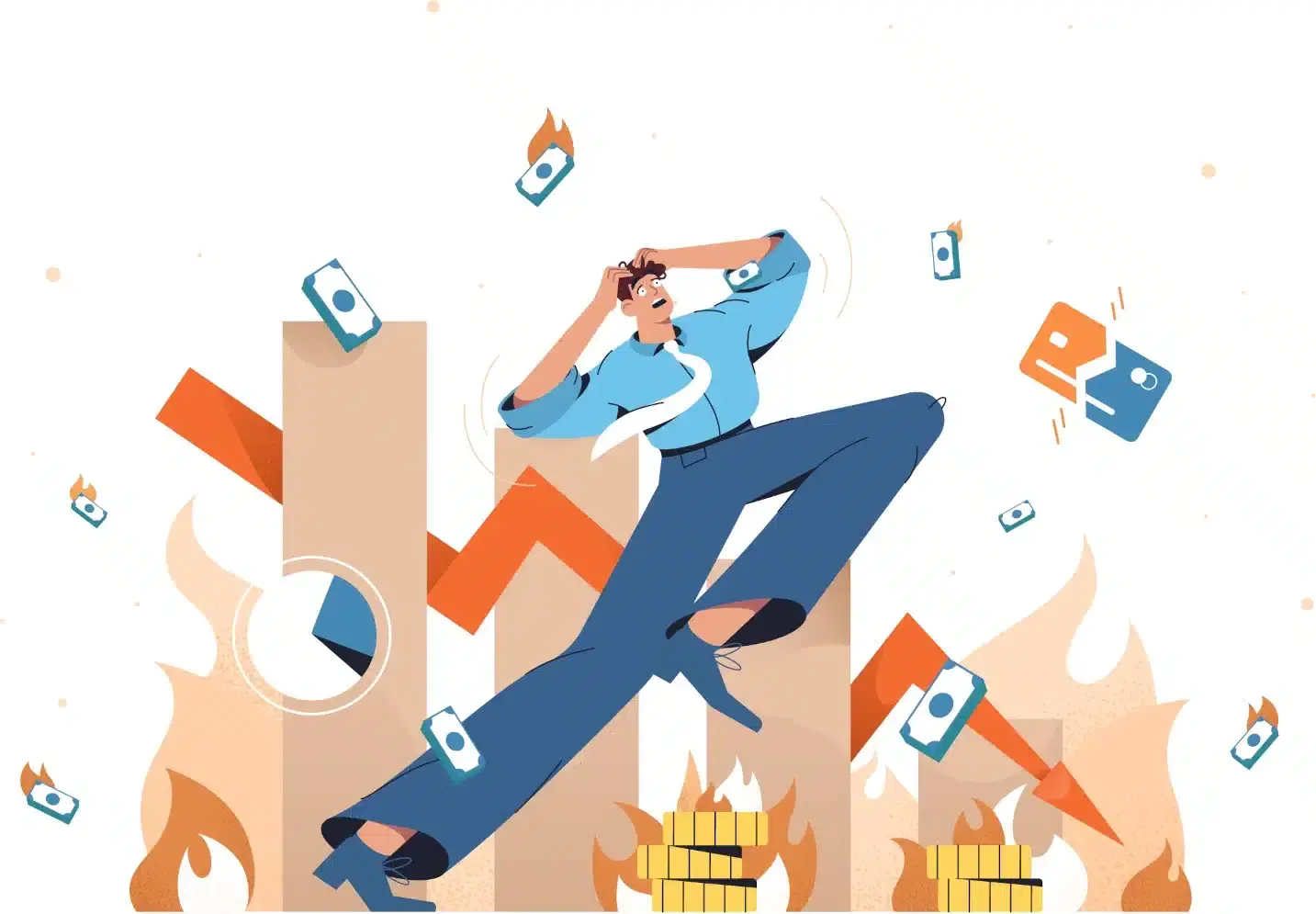
However, when the flow of revenue stops, the collapse can be irreversible. Those who have experienced non-payments know firsthand how they disrupt everything.
First, profits drop significantly, and then, since the company must cover the same costs without cash, losses occur.
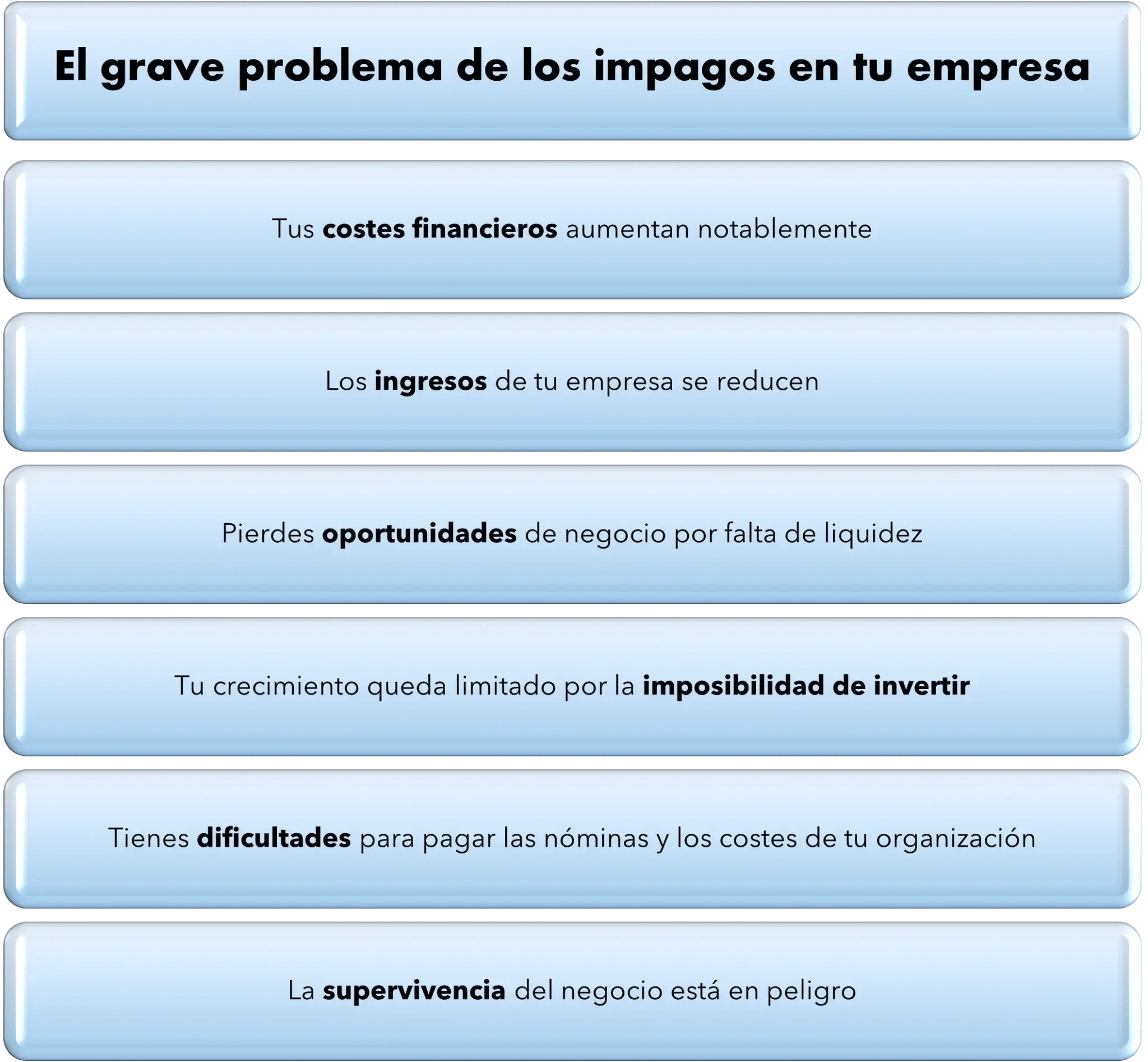
In summary, these are the negative consequences of this situation:
– Your financial costs increase significantly.
– Your company’s revenue decreases.
– You lose business opportunities due to a lack of liquidity.
– Your growth is limited by the inability to invest.
– You have difficulty paying payroll and covering your organization’s expenses.
– The survival of your business is at risk.
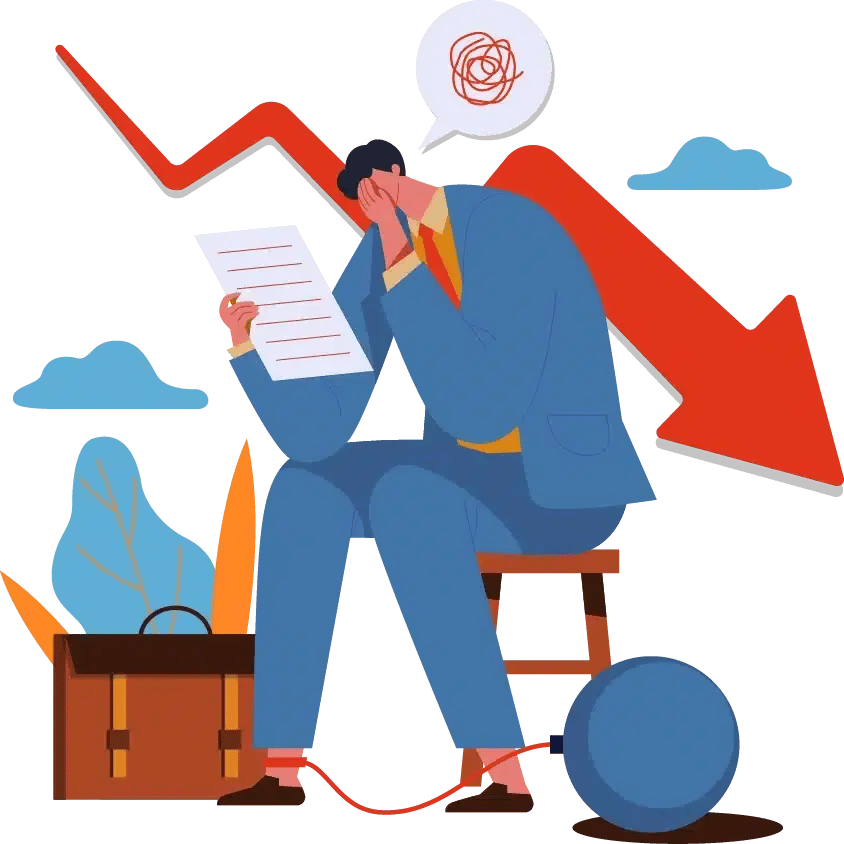
When delinquent payments skyrocket, you enter a very dangerous spiral of nonpayment that severely weakens your business. If this situation becomes chronic, your company will be headed for bankruptcy. In that sense, addressing these delinquent payments proactively and effectively is the difference between going out of business and remaining viable.
3. How Should Your Company Address Late Payments?
Managing delinquent payments can be a complicated task, but there are three main strategies for combating this problem:
1. Prevent them and avoid non-payments.
2. Manage delinquencies when they occur.
3. Find financing to address the lack of liquidity.
4. How can you prevent non-payments?
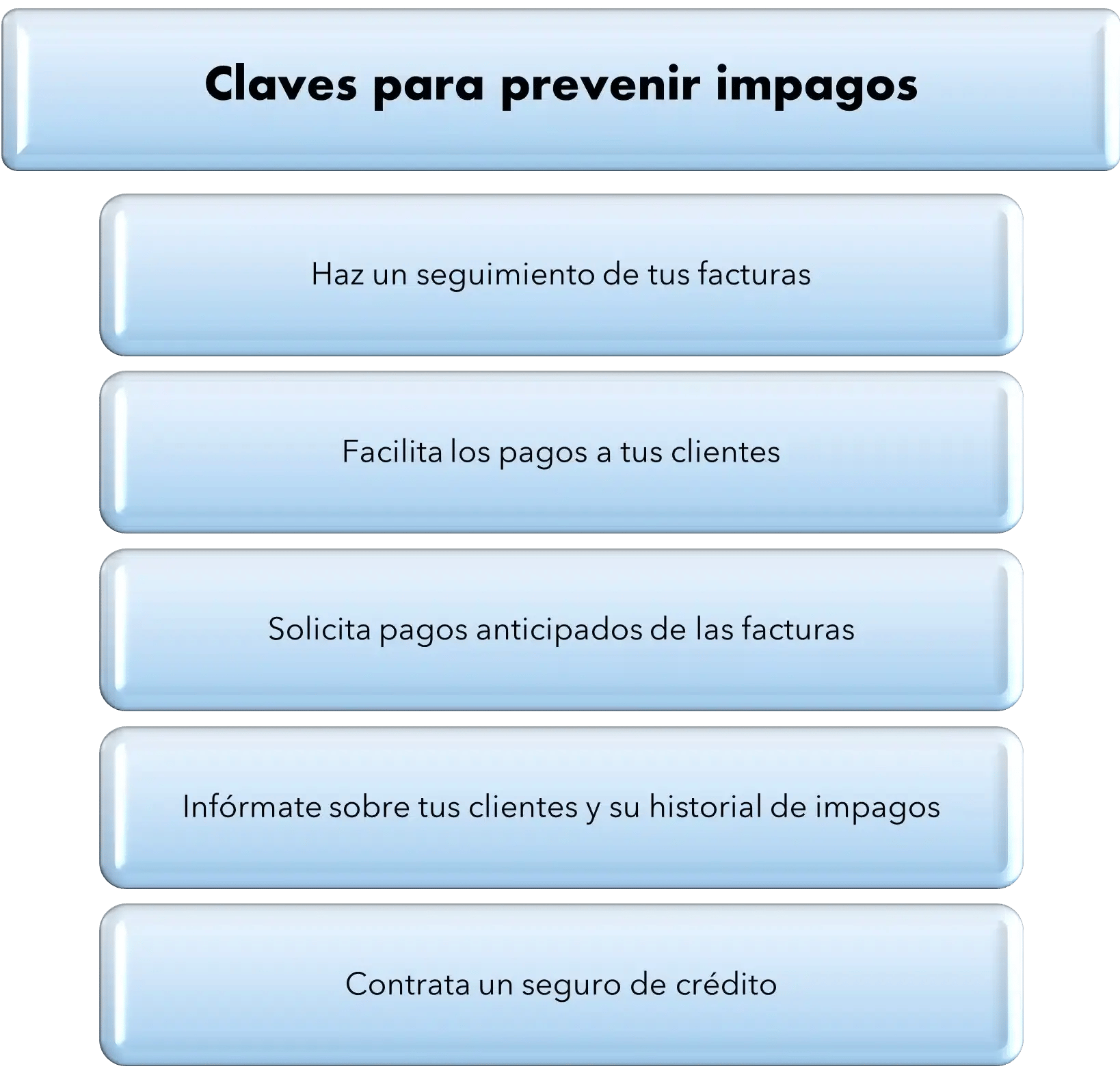
There are best practices that will help you reduce the risk of delinquent accounts and their impact on your business.
Specifically:
– Keep track of your invoices. Regularly check their status—that is, which ones have been paid and which ones are still outstanding.
– Make it easy for your customers to pay. Communicate due dates and payment deadlines in writing. Also, agree with customers on the most appropriate payment methods.
– Request advance payments on invoices. Collecting in advance reduces the severity of this risk and its consequences. A best practice is to ask for 50% upfront: this way, you cut cash flow problems in half even if you don’t collect the rest.
– Research your customers and their history of nonpayment. Of course, debtors are skilled at hiding their intentions, but if you investigate and act prudently, you’ll be less vulnerable. It’s better to turn down a suspicious customer than to suffer a nonpayment later.
– Purchase credit insurance. The key is to find an option that’s affordable and cost-effective for your organization.
5. How to Manage Delinquent Accounts?
Admittedly, there aren’t many alternatives once a business has already defaulted on payment , but we recommend that you manage outstanding debts as follows:
– Renegotiate the debt. Agree with the debtor on new installment payment schedules or a debt reduction to encourage them to pay, if there’s no other option.
– Be patient and don’t give up. Persevere—at the very least, make it difficult for the other party.
– Hire a debt collection agency.
– Take legal action.
As you can see, all these options will cost you money, but it’s always better to recover part of the total than to collect nothing at all.
6. What’s the best financing option when faced with non-payment?
Turn to alternative financing if you find yourself in this situation; it will offer you better terms than traditional banks during these difficult times when assessing the risk of the commercial credit payer.
In addition, it provides you with very attractive options for preventing and addressing delinquency.
Specifically, and above all:
1. Discounting promissory notes. This involves “selling” these payment documents to a financial institution in exchange for a portion of the amount. The advantage is that you collect the funds before the due date and, if agreed upon, the buyer assumes the risk of non-payment.
2. Invoice advance. This is a similar process, but it applies to outstanding invoices. They are submitted and paid in advance thanks to the financier. When the arrangement is without recourse, subsequent non-payment will not affect you or cause cash flow problems.
The conclusion is clear:
Corporate non-payments are a serious and very dangerous problem, with potentially irreversible consequences.
Alternative financing and proper management of delinquent accounts are your main remedies.
Image by pikisuperstar on Freepik
Image by user6702303 on Freepik