2023 Self-Employment Contributions in Spain: Calculation, Reductions, and Tips

The 2023 self-employment contribution is one of the issues of greatest concern to self-employed workers in Spain. It is a mandatory monthly payment required to remain registered with the Social Security system, and the amount varies depending on a number of factors. In this article, we’ll explain what it is, how it’s calculated, what options are available to reduce it, and the potential consequences of nonpayment.
1. Definition and Purpose of the Monthly Contribution
This contribution refers to the financial payment that self-employed workers must make to remain enrolled in the Special Social Security System for Self-Employed Workers (RETA). This contribution grants them access to benefits such as health care, retirement, and benefits upon cessation of activity.
In addition, this payment allows self-employed workers to comply with the tax and labor obligations required by Spanish law.
2. How much is the self-employment contribution?
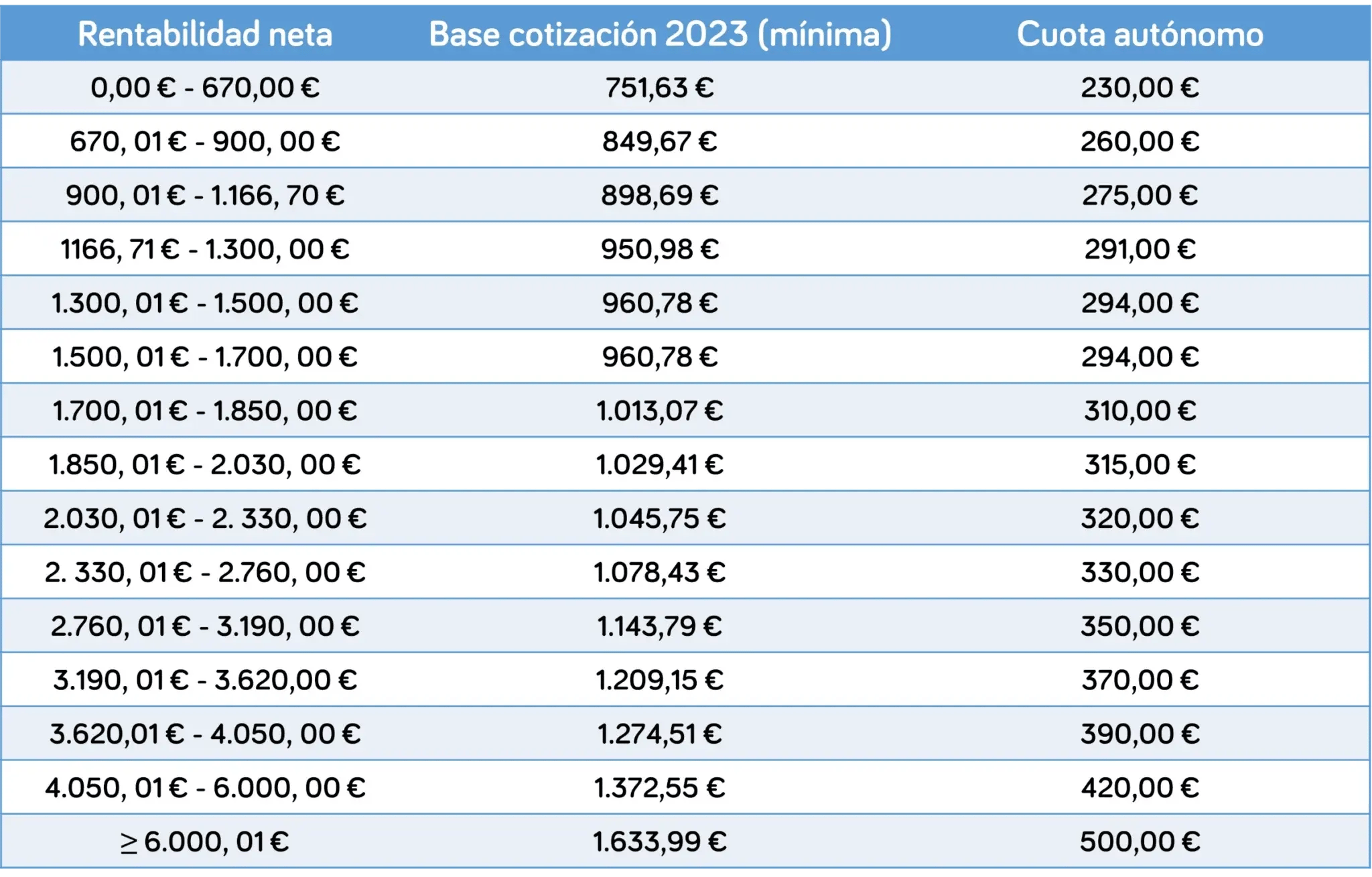
The amount varies depending on the chosen contribution base, the worker’s age, and the professional activity performed. In 2023, the minimum contribution is 230 euros, while the maximum can reach up to 500 euros per month.
However, there are specific reductions and credits that may apply depending on the taxpayer’s situation.
3. What factors influence the amount?
The main variable is the contribution base, which in 2023 ranges from 1,260 euros to 4,495.50 euros per month. The percentage to be paid is determined based on this base.
Other factors that affect the final amount include the self-employed individual’s age, the sector of activity, and the availability of any applicable rebates.
4. Is it possible to pay less?
Yes, there are measures to reduce this burden. For example:
A flat rate for new self-employed individuals during the first 12 months.
Taxcredits for hiring employees.
Tax deductions on personal income tax or corporate income tax, such as the deduction of the tax payment itself.
These options help ease the financial burden, especially in the early stages of business operations.
5. Consequences of Nonpayment
Failure to meet this obligation can have serious consequences. These include:
Loss of entitlement to benefits (health care, pensions, etc.).
Seizure proceedings or surcharges imposed by Social Security.
Disqualification from working as a self-employed individual.
Therefore, it is essential to stay current with this obligation or seek alternatives if difficulties arise.
6. Keys to Effective Management
To manage this contribution effectively, it is recommended that you:
Plan your budget to include this fixed monthly expense.
Stay informed about tax credits and any available financial assistance.
Consult a tax or employment advisor to optimize your payments.
Track income and expenses using basic accounting tools.
Organized management allows you to meet this obligation in a sustainable way and avoid financial surprises.
The 2023 self-employment contribution is an essential payment for self-employed individuals in Spain. Although it represents a fixed monthly expense, it is possible to reduce its impact through rebates, deductions, and proper planning. Staying informed and seeking professional advice can make the difference between a burden and an investment in the worker’s future security.

Image by vectorjuice on Freepik
Image by cookie_studio on Freepik