
What Is an Economic Recession, and How Can We Deal With It?
Fear of a new economic recession is a hot topic these days, as it is causing a great deal of concern among the public. In this blog post, we’ll explain what an economic recession is, how to estimate its impact, and what its possible causes and consequences are.
1. What Is an Economic Recession?
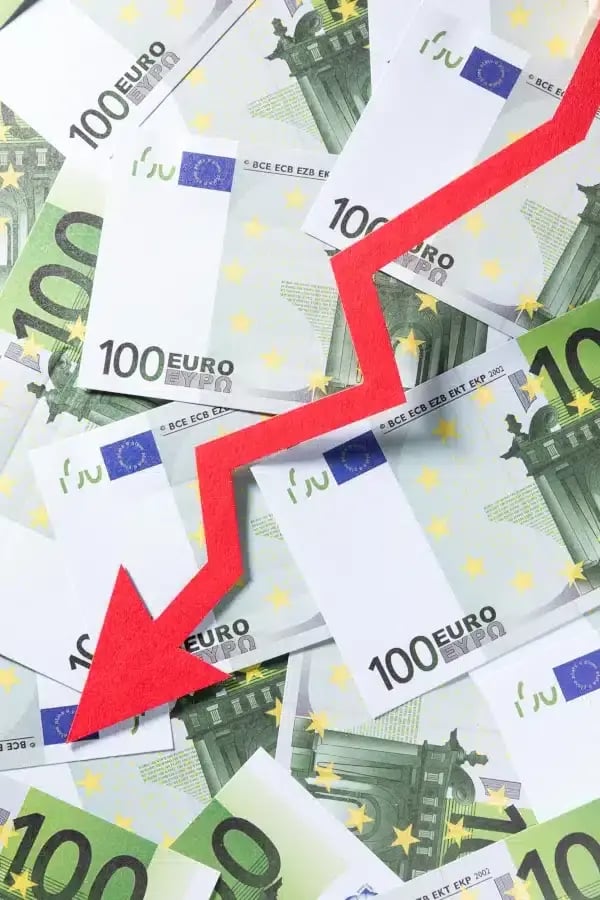
An economic recession is defined as a prolonged period of decline in the economic activity of a country or region. This contraction is measured by Gross Domestic Product (GDP), which is the total value of all goods and services produced in an economy over a specific period of time, typically a quarter or a year.
A decline in GDP is reflected in a contraction in production, employment, and the consumption of goods and services. These factors can lead to a decrease in people’s income and earnings, as well as in both public and private spending.
2. How is an economic recession measured?
Generally, we can speak of an economic recession when the downward trend in GDP persists for two consecutive quarters. Therefore, if the decline in GDP is observed in only one quarter, we cannot classify it as a recession.
However, not all economic recessions are assessed solely based on this criterion. Sometimes, economists and governments also consider other indicators, such as the unemployment rate, inflation, and the consumption of goods and services.
3. What are the possible causes of an economic recession?
There are many causes that can trigger an economic recession, but some of the most common include:
– Financial crises: A financial crisis, such as the one that occurred in the U.S. mortgage market in 2008, can trigger an economic recession. In such situations, businesses and individuals find it difficult to pay their debts, which can lead to a decline in economic activity.
– Inflation: When prices for goods and services rise steadily, people may not have enough purchasing power to buy them, which would also lead to a decline in economic activity.
– Decline in demand for goods and services: If people are not buying products and services, businesses may have difficulty selling them. This can lead to a decline in production and employment.
– Rising interest rates: When banks raise interest rates, it can become more difficult for individuals and businesses to obtain loans. This, in turn, can reduce investment and consumption of goods and services.
4. What are the consequences of an economic recession?
The consequences of an economic recession are potentially severe and long-lasting. Among the most common consequences are:
– Unemployment: During an economic recession, many businesses struggle to stay afloat, which can lead to layoffs and a rise in the unemployment rate.
– Decline in income and earnings: If businesses produce less and people lose their jobs, there may be a decline in income and earnings.
– Reduced consumption of goods and services: When people have less disposable income, they are forced to cut back on spending on goods and services. This can lead to a decline in demand and production of goods and services, which in turn has a negative impact on the economy.
– Decrease in investment: During an economic recession, many companies may have difficulty obtaining financing. This would trigger a decline in investment in new projects, hindering innovation and economic growth in the medium and long term.
It is important to note that these effects are not exhaustive and may vary depending on the severity and duration of the recession. Therefore, it is crucial to take appropriate measures to prevent and manage an economic recession in order to minimize its impact on society and the economy as a whole.
5. How can an economic recession be addressed?
There are various policies that can help address an economic recession. Among the most common measures are:
– Fiscal policies: These focus on government spending and taxes. During a recession, the government can increase public spending and reduce taxes to stimulate economic activity.
– Monetary policies: These focus on the money supply and interest rates. During a recession, central banks can lower interest rates to make loans more accessible and stimulate investment.
– Employment policies: These focus on creating jobs and improving people’s quality of life. The government can invest in job training programs and create public works jobs.
– Trade policies: These focus on international trade and can help protect domestic workers and businesses. The government can impose tariffs and trade barriers to protect domestic businesses from foreign competition.
In summary, an economic recession is a prolonged period of declining economic activity in a nation or region. It can lead to serious consequences, such as unemployment, reduced income and earnings, lower investment and savings, a decline in quality of life, and increased poverty, among others.
However, there are policies that can help address an economic recession, such as fiscal, monetary, employment, and trade policies. It is important to stay informed about the current economic situation and understand how measures can be implemented to mitigate the effects of an economic recession.