I've accumulated debt: What can I do?

1. What to Do If You're Starting to Accumulate Debt
Accumulating debt is harmful to both your company’s financial health and your personal well-being.
When a business or an individual faces financial difficulties, mounting debt becomes a real threat, capable of destroying all accumulated assets.
Turning to alternative financing is a valid and worthwhile option. However, the benefit of converting your credit sales into cash sales must outweigh the cost of these services. Otherwise, they won’t resolve your situation—they’ll only make it worse.
As you can imagine, taking on new debt to pay off old debt leads to an increase in interest, expenses, and future obligations.
In fact, in most cases, it turns into a very dangerous spiral of financial ruin.
2. When Taking on Debt Is No Longer a Solution
If accumulating debt has become a regular habit, stop and try to put a halt to it right away.
Progressive debt accumulation never solves anything. What seems at first like the only viable option soon turns into a nightmare from which it will be very difficult to escape.
Keep in mind that every loan you take out comes with an additional cost. Not only will you have to repay the principal, but also the interest, fees, and other associated costs… In other words, excessive debt creates a snowball effect. The more you owe, the more you borrow, and, consequently, the more you owe each time.
Furthermore, this progressive indebtedness makes you a high-risk borrower.
As a result, the financing terms get worse and worse: interest rates become sky-high, repayment deadlines are set very short, and traditional banks will, sooner rather than later, freeze the financing they’ve granted. Microloans, credit cards, and other similar solutions ultimately only entrench your financial problems further.
Therefore, accumulating debt after debt is financial suicide.
It’s only a matter of time before the snowball keeps rolling and swallows you up financially, leaving you with no chance of recovering.
3. When Should You Go Into Debt, and When Should You Avoid It?
We could summarize this advice as follows:
Take on debt to invest, make money, or acquire new assets—not to consume or to pay off previous debts.
And whenever you take on debt to invest, do so wisely; conduct a thorough analysis of the investment and manage risk effectively.
Keep this idea firmly in mind, and if the circumstances aren’t right, look for alternatives. It’s better to anticipate and mitigate an unpleasant outcome than to persist with it until it leads to a situation with no solution.
4. What should you do if you’re starting to accumulate debt?
At WorkCapital, we like to be honest:
Gradual accumulation of debt and over-indebtedness are neither pleasant experiences nor easy problems to solve.
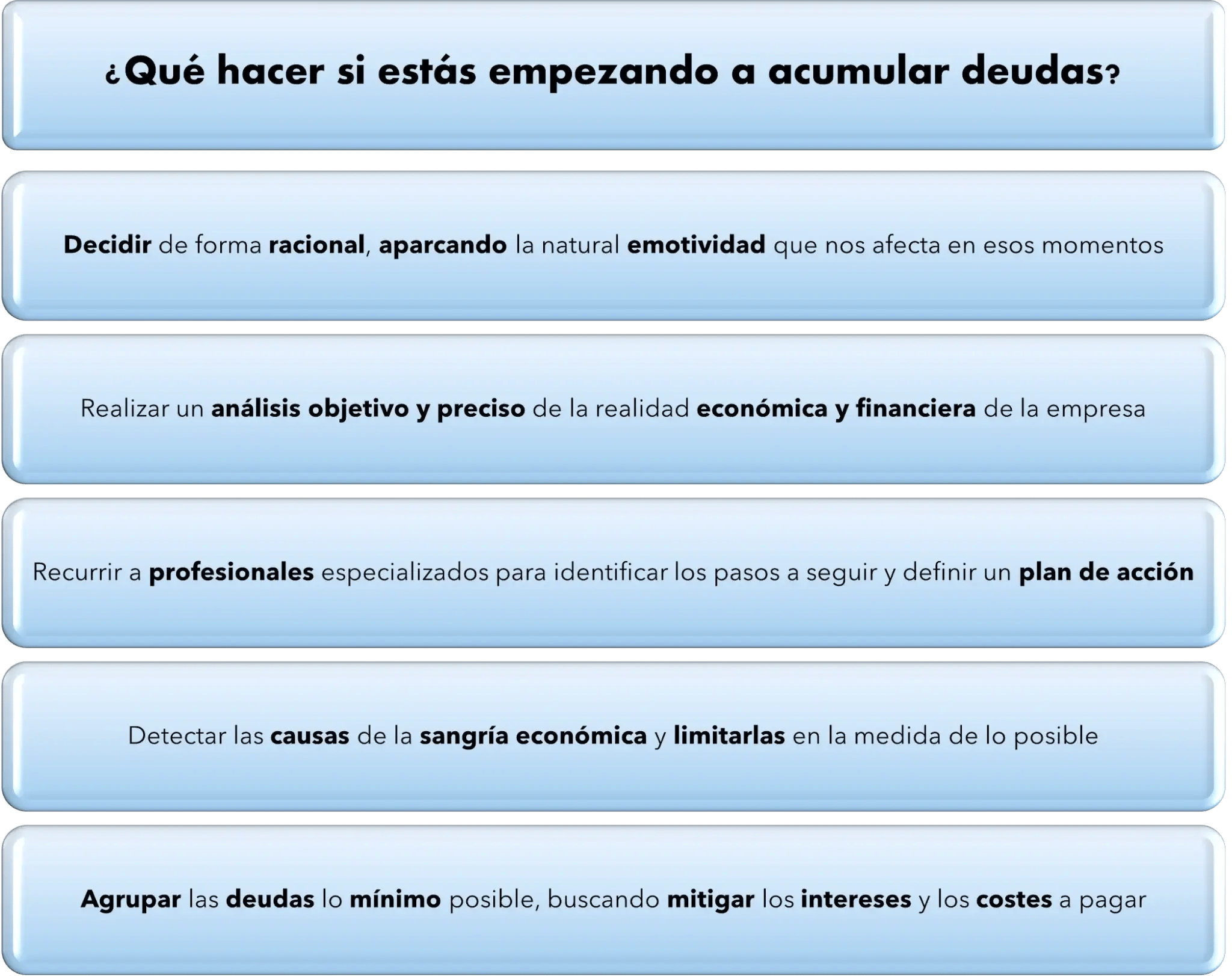
The most important thing is to remain calm enough to:
– Make rational decisions, setting aside the natural emotional reactions that affect us in such moments.
– Conduct an objective and accurate analysis of the company’s economic and financial situation.
– Seek out specialized professionals to identify the steps to take and define an action plan.
– Identify the causes of the financial drain and limit them as much as possible.
– Consolidate debts as little as possible, seeking to minimize interest and other costs.
Here are the specific steps you should take when you detect excessive debt or an unstoppable trend toward increasing debt:
– Create a monthly budget—or even a weekly one, if necessary.
– Be very selective with your spending; cut out unnecessary expenses.
– Spend, consume, and invest wisely.
– Take the time to compare offers to find the best prices without sacrificing quality.
– Identify and stick to your debt limit.
– Find a single lender to consolidate your debts and reduce your expenses.
– Pay on time: late payments are very costly.
– Create, implement, and stick to a financial survival plan. Unless you have expertise in this area, support from qualified professionals is crucial.
– Look for financial alternatives and think outside the box.

Alternative financing can be a great help, and at WorkCapital, we’re experts at offering you the best solutions to resolve your financial problems as quickly as possible.
Among our services, you’ll find promissory note discounting and invoice advances.
These alternatives will allow you to bridge your cash flow gaps and secure working capital.

Image by pch.vector on Freepik
Image by wayhomestudio on Freepik