1. Do you know how to avoid unpaid bills?
Normally, companies strive to generate high revenue, but what’s truly essential is getting paid for the work or services rendered on time and in full.
Therefore, preventing unpaid invoices becomes a matter of vital importance for the project’s survival.
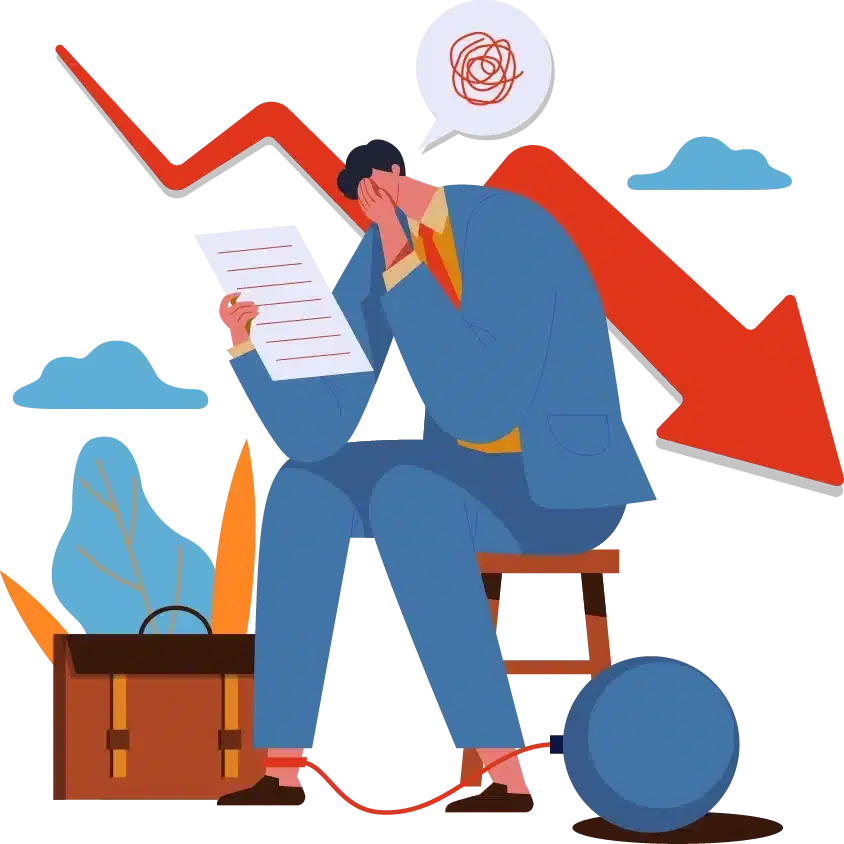
Many organizations have been driven into bankruptcy because of unpaid invoices.
That’s why we’re sharing information about the devastating consequences of late payments and offering advice on how to prevent them.
2. Unpaid invoices can destroy your business
Did you know that around 30% of Spanish companies are at risk of non-payment?
Preventing late payments and avoiding unpaid invoices are top priorities in the day-to-day operations of any business, as a delay in certain payments can jeopardize your cash flow.
Keep in mind that most of your organization’s financial obligations cannot be postponed if revenue falls short.
Therefore, these delays caused by others have a direct impact on your business.
This is especially true during economic times like the current ones.
Among the most common consequences, we highlight the following:
Liquidity problems, delays in paying payroll, instability, and an increased need for financing.
When this situation drags on, the effects can be irreversible.
More than one company has been forced to close due to unpaid bills!
Would you like to know how to prevent this from happening to you?
3. How to Avoid Unpaid Invoices
Although this is ultimately beyond your company’s control, there are some best practices for preventing late payments that we suggest you start implementing as soon as possible:
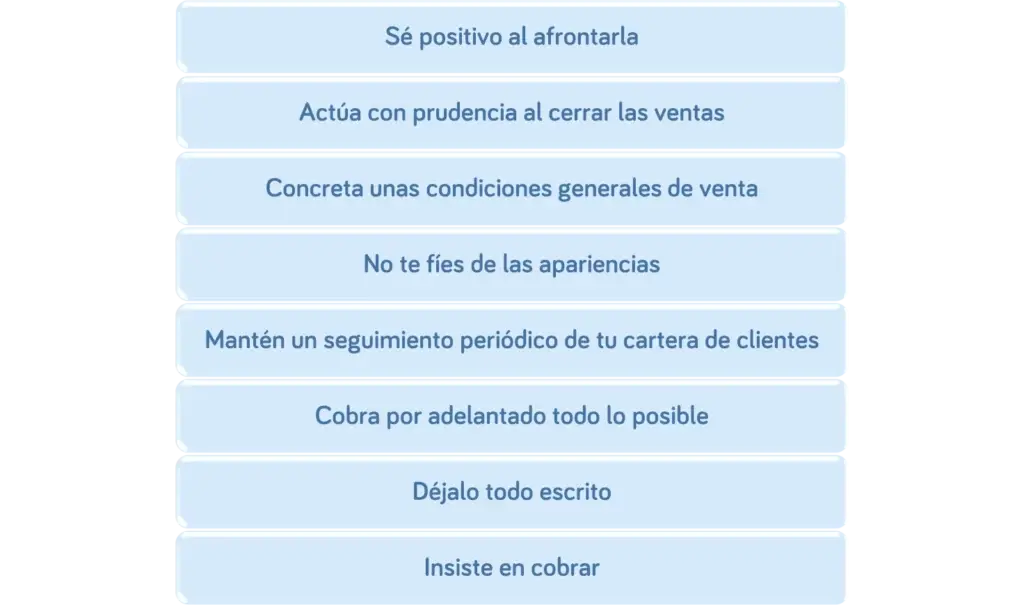
3.1 Stay positive when dealing with it
Your attitude is key to preventing late payments.
Tell yourself that this isn’t an insurmountable problem where all you can do is cross your fingers.
It’s within your power to prevent unpaid invoices, so take a positive approach.
3.2 Proceed with caution when closing sales
We touched on this at the beginning:
What matters isn’t making the sale, but getting paid.
Often, selling under pressure leads to unpaid invoices.
In any case, failing to assess a customer’s creditworthiness before closing a sale can have very negative consequences.
Therefore, we recommend that you conduct thorough, data-driven market research before closing large-volume transactions that are critical to your business.
3.3 Establish General Terms and Conditions of Sale
Strengthen communication and transparency to prevent late payments.
Provide each customer with all the necessary information so they know exactly what their obligations are.
We suggest that all these terms be established before the business relationship begins.
3.4 Don’t be fooled by appearances
Most delinquent customers project an image of financial stability and offer guarantees that would make it difficult for us to doubt them in advance.
Don’t assume that just because a company is large, prestigious, or publicly traded, it can’t fall into the trap of late payments.
Use the appropriate technological tools to evaluate and analyze all your new customers.
In this case, a certain degree of skepticism is healthy.
3.5 Monitor your customer portfolio regularly
The only constant is change—and that applies to business relationships as well.
Just because a client was initially creditworthy doesn’t mean they’ll always remain so.
So monitor their progress regularly, especially before renewing major contracts.
Be even more thorough and rigorous with start-up companies.
3.6 Collect payment in advance whenever possible
If you collect payment in advance, the risk of nonpayment disappears.
Furthermore, it’s an impeccable financing policy.
However, few clients are willing to accept these terms, and they aren’t always the most attractive.
In any case, include partial advance payments in your terms of service.
Offering additional incentives and discounts may be a good way to achieve this goal.
3.7 Put Everything in Writing
Document the entire sales process in writing and request express acceptance of the payment terms and defined deadlines.
3.8 Keep following up until you get paid
Unpaid invoices don’t pay themselves: you have to take action and never settle for a delinquent payer.
Keep following up and demanding payment time and again.
Feel free to contact WORKCAPITAL to learn about business financing solutions that will help you reduce the risk of non-payment.
We’ll tailor our solutions to your needs and guide you through the entire financing process, addressing any questions you may have along the way.