Year-End Closing for SMEs: How to Plan for Liquidity to Start the Year Stress-Free
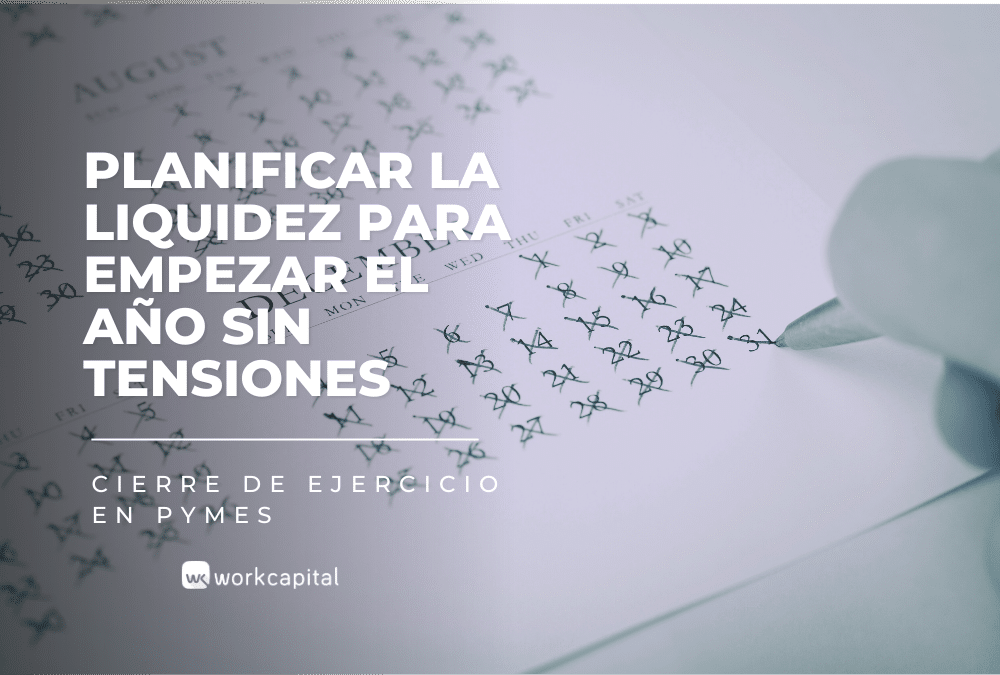
The end of the fiscal year is a critical time for any small or medium-sized business. Not only because of the financial results, but also because of the direct impact it has on cash flow and the company’s ability to weather the first few months of the new year.
During this period, it is common for many companies to report strong financial results but face a lack of liquidity due to long collection periods, a concentration of payments, or a one-time increase in expenses.
The Difference Between Accounting Results and Liquidity
One of the most common mistakes at year-end is assuming that a good financial result implies a healthy financial position.
However:
Revenue is not always the same as cash collected.
Much revenue is still due.
Payments (taxes, suppliers, payroll) do have specific due dates.
That’s why a company can end the year with a profit and still face cash flow pressures.
Why Year-End Closing Requires Specific Planning
Several factors that affect liquidity come into play during the year-end closing:
Tax settlements.
Bonus payments.
Settlements with suppliers.
Operational preparations for the start of the new year.
In addition, banking processes tend to slow down during this time of year, which limits the ability to respond to unforeseen events.
Liquidity solutions tailored to year-end closing
For many small and medium-sized businesses, the key is to anticipate future receipts and align cash flow with the actual payment schedule.
Among the most commonly used solutions at this stage are:
Advance payment on invoices already issued.
Discounting promissory notes not yet due.
Financing solutions linked to actual sales, not to structural debt.
These alternatives provide liquidity without compromising the company’s future operations.
Practical Example
A small service-sector business closes the fiscal year with a portfolio of invoices due within the next 60 and 90 days.
However, it needs immediate liquidity to pay taxes and ensure business continuity in January.
By receiving an advance on part of those receivables:
It improves its cash position.
It avoids cash flow pressures at year-end.
It starts the new year with greater financial stability.
Advantages Over Traditional Financing
Alternative liquidity solutions offer clear advantages over traditional banking:
More streamlined processes.
Less red tape.
Financing tied to the company’s actual business activity.
Flexibility to adapt to specific situations, such as year-end closing.
Each transaction is analyzed on a case-by-case basis, taking into account the specific situation of each small business.
The end of the fiscal year should not become a source of financial stress.
Proper liquidity planning allows you to:
Close the year with peace of mind.
Meet obligations without slowing down operations.
Start the new fiscal year with room to maneuver.
Anticipating and effectively managing outstanding receivables is key to turning the year-end closing into an opportunity for stability and growth.