

New Reform of the Bankruptcy Law
1. New Reform of the Bankruptcy Law
On September 26, the new reform of the bankruptcy law took effect.
Insolvency law governs a country’s insolvency system.
Its purpose is to establish and define the steps that companies with a large accumulation of debt and an inability to pay it off must follow.
Essentially, it defines how to carry out so-called bankruptcy proceedings, which outline how to liquidate a company in the event of definitive insolvency.
For this reason, we want to familiarize you with it and clarify the main changes it introduces.
2. What areas have the changes to the Spanish insolvency law focused on?
The latest insolvency reform seeks to address the main limitations of the Spanishinsolvency system .
The Preamble itself specifies the main areas addressed:
– Pre-insolvency instruments.
– Delayed filing for bankruptcy.
– Excessive prolongation of insolvency proceedings. It also notes and warns that 90% of cases end in liquidation, not in a reorganization agreement.
– Failure to take advantage of the “second chance.”
In the introductory text, lawmakers express their desire to overcome these limitations through a profound structural reform of the insolvency system.
As you well know, excessive debt can lead to a situation of economic unsustainability for your company. To counter this reality, the only options are to try to solve the problem or liquidate the company—in other words, to give up.
3. Key Changes in the Insolvency Reform
Below, we analyze the most significant changes affecting Spanish bankruptcy law following this amendment.
3.1. Pre-insolvency
First, new mechanisms and opportunities for debt restructuring have been established.
In this regard, creditors also benefit, as pre-bankruptcy instruments are established that provide greater flexibility, scope, and versatility.
For example, the inclusion of all types of creditors, including the shareholders of the indebted company.
3.2. Restructuring Plans
Furthermore, the insolvency reform aims to proactively address the financial rehabilitation of companies at risk of insolvency.
Action is taken earlier in response to such debt, whether secured or unsecured.
The goal is to increase the chances of economic recovery.
The company loses less value, and, furthermore, commercial courts reduce their workload—thereby streamlining the processes.
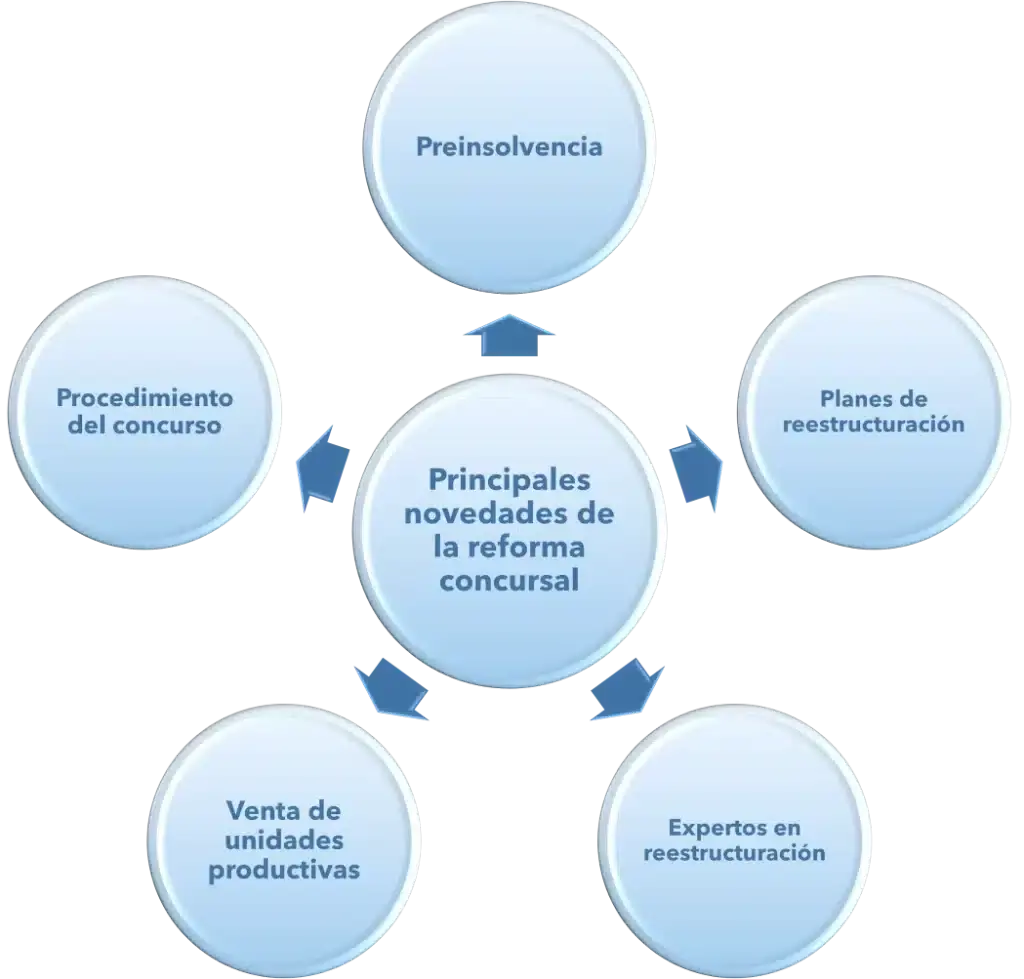
3.3. Restructuring Experts
In the same vein, this role—recently incorporated into the insolvency law—complements the previous section.
Their role is to assist the debtor and its creditors in the initial meetings, with the aim of finding a solution satisfactory to all parties.
3.4. Sale of Production Units
Fourth, the so-called “prepack” is specified in detail.
The judge presiding over the insolvency proceeding appoints an expert and tasks them with soliciting potential offers to purchase the available production units.
The completion of these transactions alleviates, even if only partially, the debtor company’s situation.
This option to carry out preparatory steps for the transfer in advance is inspired by solutions implemented in the Netherlands and the United Kingdom.
3.5. Insolvency Proceedings
Finally, the insolvency reform modifies certain key procedures.
For example, it eliminates the advance proposal for a reorganization agreement.
Additionally, it recognizes subordination agreements that are not detrimental during the final phase of liquidation.
4. How can microenterprises access an insolvency proceeding?
The truth is that a special procedure is established for this category, although certain requirements must be met, such as the following:
– Having had an average of fewer than ten employees during the year prior to the application.
– Have an annual turnover of less than 700,000 euros or, failing that, liabilities of less than 350,000 euros.
To verify these last two figures, the most recent audited financial statements from the fiscal year prior to filing the application will be used.
5. How can you access loans from the Official Credit Institute (ICO)?
At the same time, the procedure for refinancing guaranteed debt through the Official Credit Institute (ICO) is outlined.
6. A Final Summary of the Insolvency Reform
To conclude, let’s briefly summarize how these legal changes will alter the Spanish insolvency system in three major ways:
1. Better and faster access to preventive restructuring frameworks for viable companies facing debt difficulties.
2. Increased efficiency in insolvency proceedings.
3. Access to a second chance for individuals acting in good faith who are insolvent or over-indebted.
At this point, you should have a clearer understanding of the new bankruptcy law. Hopefully, everything goes well for your company and you’ll never have to resort to it.
How can WorkCapital help you?
As you well know, WorkCapital is a leader in the alternative financing sector.
Thanks to our invoice advance and promissory note discounting services, we’ve positioned ourselves as one of the best alternatives for improving your cash flow and short-term solvency.
Whether or not you’re in an insolvency proceeding, don’t hesitate to contact us if you need immediate liquidity.